Treating cottage food and licensed kitchen goods as the same category
Markets see confusion every season between cottage food and foods prepared in licensed kitchens. Cottage food laws allow vendors to sell specific low-risk items made at home, like jams, breads, and baked goods that do not need refrigeration. These products usually come with clear ingredient and process restrictions.
Licensed kitchen goods are a different matter. These foods can include soups, salsas, hot meals, and anything that needs temperature control for safety. Vendors making these items must prepare them in a commercial kitchen inspected by the health department. A home kitchen does not meet this standard, even if the vendor is careful about cleanliness.
The mistake comes when a vendor tries to sell something outside the cottage food list from home, or claims a commercial kitchen product as cottage food to avoid permits and inspections. Inspectors know the difference. If a vendor cannot produce a permit from a health department for a risky food, the market can face fines or lose its permit.
Keep reading: Inside California's Certified Farmers Market Paperwork
Letting labeling slide on home produced foods
Labeling requirements for cottage foods are strict and enforced in most states. Each item must have a label with the common name, all ingredients listed in descending order by weight, the producer's name and address, and the words "made in a home kitchen" or similar phrase required by state law. Some states want allergen warnings and batch numbers as well.
When vendors hand over unmarked loaves, unlabeled bags of cookies, or jams with only a first name on the jar, this is an instant violation. Inspectors see missing labels as evidence the product was not made under the correct conditions and may halt sales for the day or confiscate the items.
Markets sometimes allow vendors to "fix" a few labels on the fly, but this is risky. If a label does not match every regulatory requirement, enforcement can be strict. Market managers should insist on sample labels for review before the season starts, and make spot checks during market days.
Missing the temporary food establishment permit window
Hot food vendors usually need a temporary food establishment (TFE) permit for each event or season, depending on local rules. The application process can take a week or more. Many counties require submission at least ten days before the first sale. Some require every helper on site to be listed by name or to have a food handler card.
The mistake comes when a vendor assumes they can fill out paperwork on the morning of the market. Health inspectors will not accept late applications. Some counties do not allow on-site permitting at all. If the permit was not issued before the first sale, the vendor must shut down, even if everything else is in order.
Market managers can avoid this by tracking permit status for each vendor. Many use a checklist before the first market day. A centralized system to track who still needs to submit or renew a permit can prevent last-minute surprises.
Keep reading: What a Stall Fee Has to Cover: Market Budget Math by Day
Sampling without handwashing, gloves and a wastewater catch
Sampling triggers extra rules
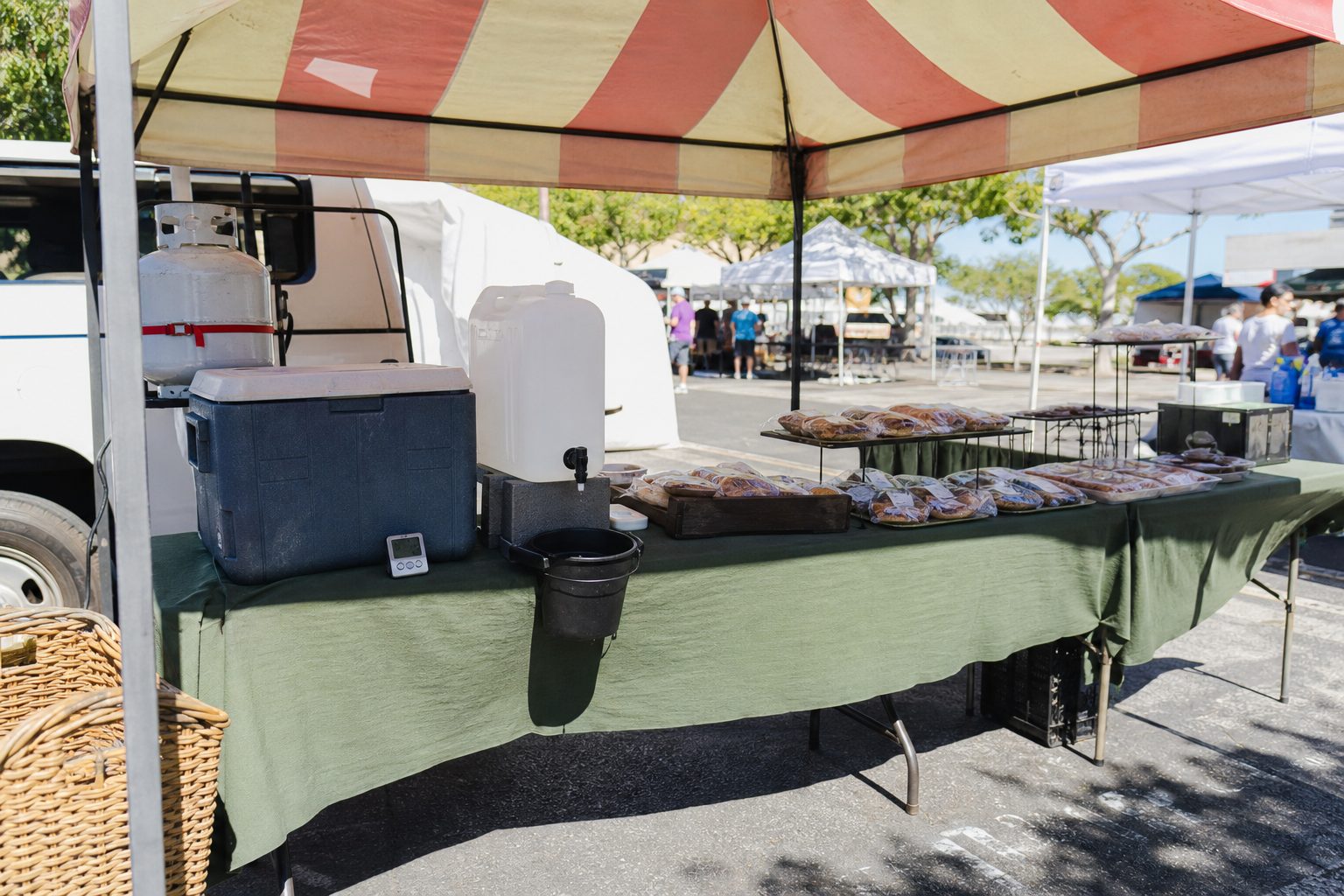
Any stall offering samples must follow food safety practices. Even a simple toothpick sample of bread or fruit counts. Health inspectors expect to see a handwashing station with soap, running water, paper towels, and a catch basin for wastewater. Hand sanitizer is not a substitute. If the vendor is slicing or portioning samples on site, gloves or utensils are required.
Common pitfalls in sample setup
Many vendors bring a jug of water and a towel but forget the wastewater catch or run out of water mid-market. If the inspector sees no handwash station, sampling stops until one is in place. Some vendors try to skip gloves for "clean hands," but the rule applies regardless of intent.
Managers should walk the market before opening to check for these setups. A checklist with the required elements, water container with a spigot, soap, disposable towels, and a five-gallon bucket for catch, is a simple enforcement tool. Training new vendors on sampling policy before the season starts will reduce repeat violations.
Propane, fryers and fire code at a hot food stall
Hot food stalls bring added risk, and fire marshals enforce strict rules on fuel storage, equipment, and open flames. Propane tanks must be secured upright and kept a safe distance from tents and cooking appliances. Many fire codes require a minimum ten-foot clearance between propane tanks and ignition sources, and at least one working fire extinguisher within reach.
Deep fryers, griddles, and similar appliances must sit on stable, non-combustible surfaces. Tents need to be flame-retardant and labeled as such. Extension cords must be rated for outdoor use and protected from foot traffic. Inspectors will look for exposed hoses, untagged extinguishers, and any grease buildup.
The most common mistake is running propane hoses under a tablecloth, which can trap heat and create a fire hazard. Second is bringing an extinguisher that is expired or too small for the size of the cooking operation. Managers should require vendors to bring equipment for inspection before opening day and maintain an equipment log for the season.
See how StallDeck handles this for farmers markets
Cold holding, thermometers and shade for the cooler
Perishable foods such as cheese, meat, cut fruit, and prepared salads must stay at or below 41 degrees Fahrenheit at all times. Vendors often use ice chests or insulated coolers, but inspectors will check internal food temperatures, not just ice level. A digital thermometer is mandatory at every stall selling cold items.
The mistake comes when vendors rely on "it feels cold" or only check the ice. If the thermometer shows above 41 degrees in the product, the food must be discarded. Leaving coolers in the sun or opening them too often will raise temperatures quickly. Some vendors forget backup ice or do not have a thermometer at all.
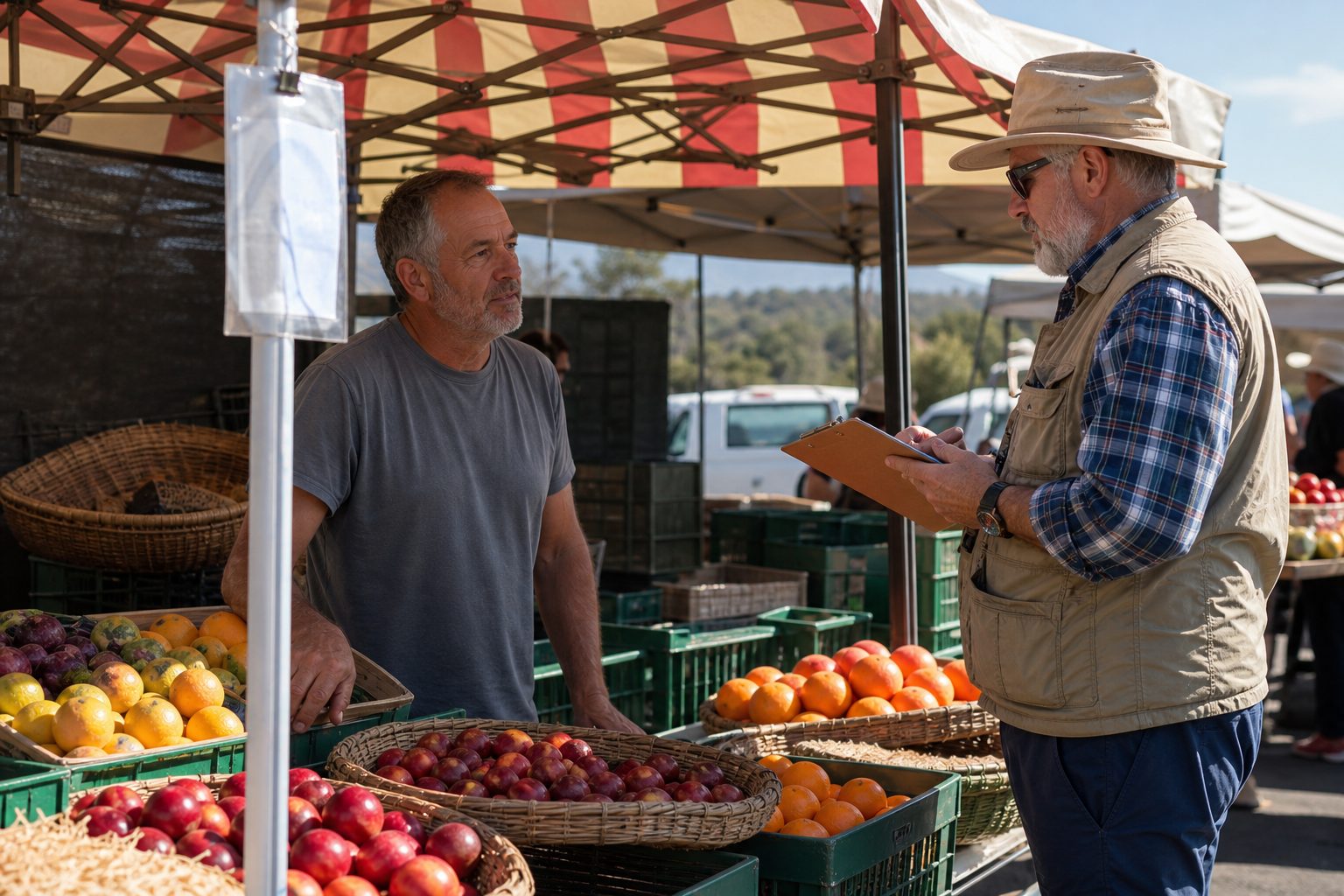
Managers should require vendors to show their thermometer and demonstrate use during setup. Providing a shaded area or pop-up canopy for coolers can help maintain safe temperatures. Inspectors will return to check if problems were found last visit, so documentation of corrective actions is important.
Assuming a permit from the next county travels with the vendor
Permits for cottage food, temporary food sales, and hot food operations are usually issued by county or city health departments. A permit from one county almost never transfers automatically to another, even if the laws are similar. Each jurisdiction has its own application, inspection, and fee process.
The mistake happens when a vendor who is approved in one market tries to set up in another county without checking local requirements. Inspectors will ask to see the local permit and may not accept out-of-county documents. Some counties require new inspections or food handler cards for every location.
Market managers can help by keeping a list of the most common counties their vendors come from and sharing a summary of local rules before the season starts. It is also wise to ask for a copy of every vendor's permit and check the issuing county before the first sale. Relying on the vendor's word can lead to permit suspensions or fines for the market as a whole.
Failing to document corrections so a repeat visit goes fast
When an inspector finds a violation, they usually issue a written notice with required corrections and a deadline for compliance. If the market or vendor does not document what was fixed, the same issue can trigger a harsher response on the next visit. Repeated violations can lead to permit suspension or loss of the ability to operate a food stall for the season.
Managers should keep a log of all violations, the corrective steps taken, and the date of the fix. Photographs of corrected setups, updated permits, or new equipment are helpful. Having these records ready for the next inspection shows due diligence and can shorten the inspector's visit.
Tools that centralize stall assignments, track fee payments, log attendance, and keep a record of vendor permits and compliance notes help market managers avoid repeat mistakes. When a system makes this information easy to review, it supports smooth market days and fewer compliance headaches.