For market managers and association coordinators

Set the stall map, collect the fees and post Saturday's vendor list from one board.

StallDeck keeps your stall map, your vendor roster and your fee ledger in the same file, so Friday night turns into a fifteen minute review instead of a rebuild. Managers in 27 states work it from a phone in the aisle and from a laptop at the association office.

  • 318 US markets run the board
  • $1.9M in stall fees cleared last season
  • Mapped and live before your next market day
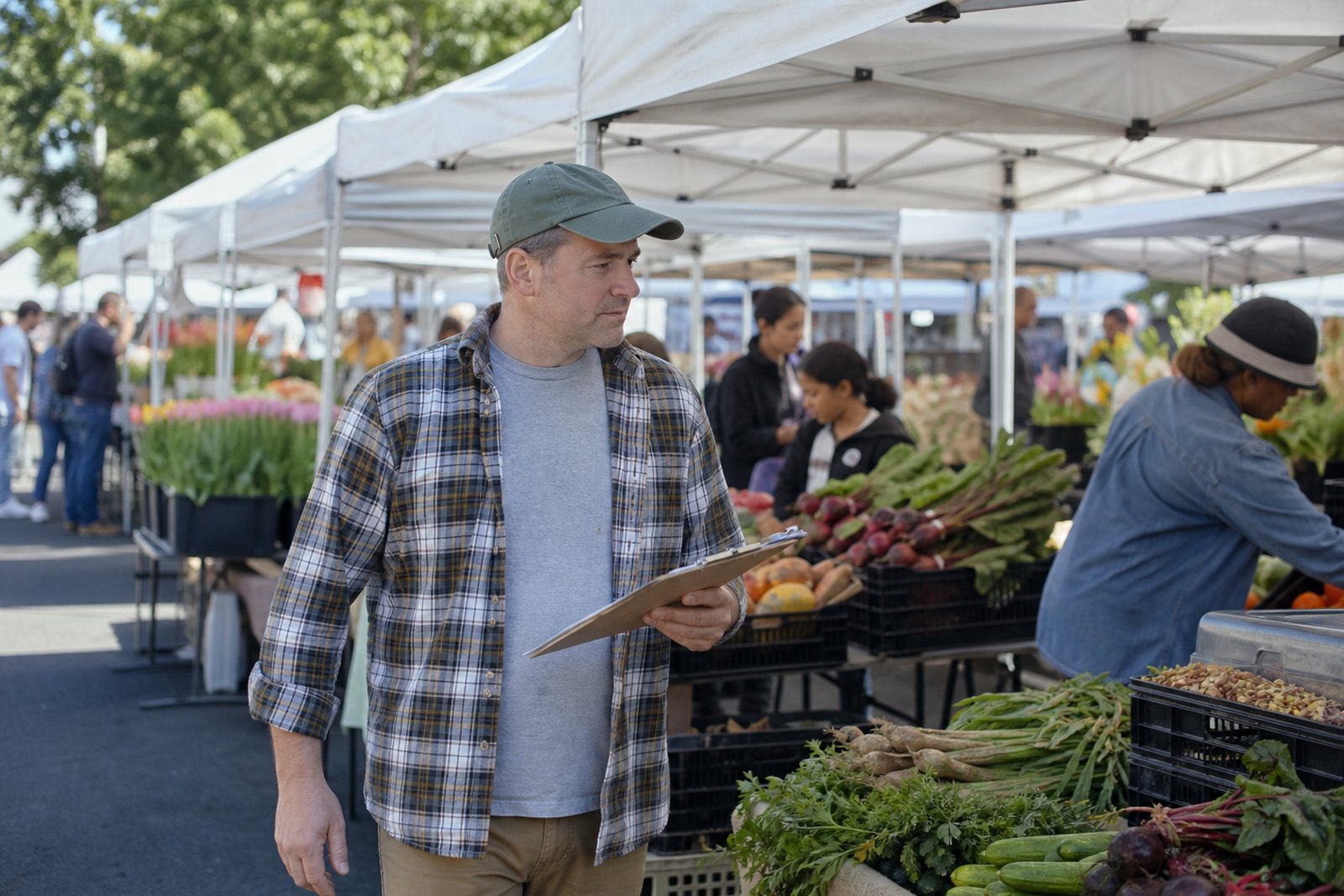
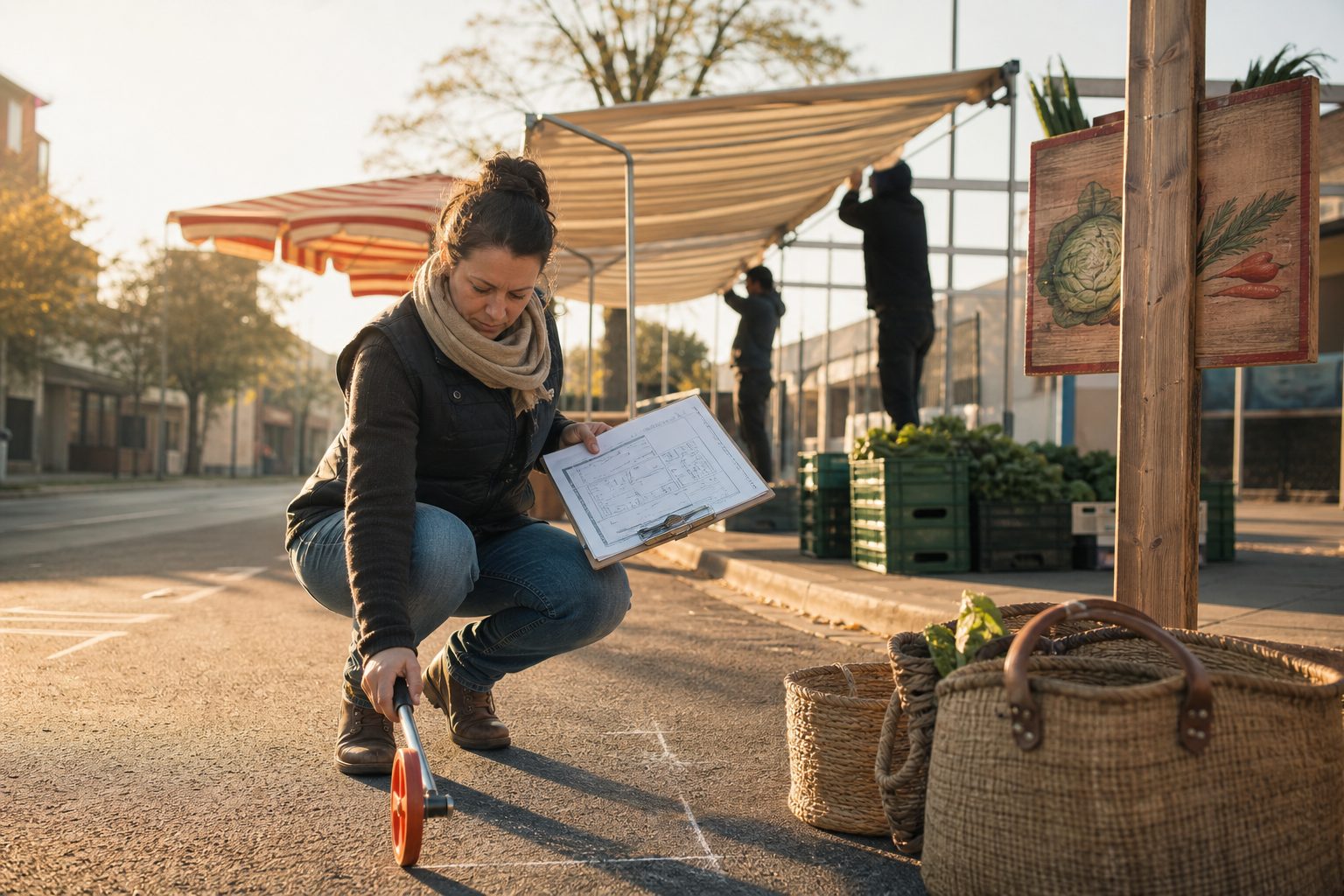
Farmers market manager holding a clipboard walking between white canopy vendor stalls stacked with crates of produce on a sunny Saturday morning
26 min Average time to build a Saturday map

Saturday, 5:40 a.m.

The market runs beautifully. The paperwork behind it does not.

Every manager we talk to has the same four piles: a site plan, a stack of applications, an envelope of day rate cash and a list of who is actually showing up. They live in different places, and they disagree with each other by Friday afternoon.

Three versions of one map

The site plan sits in a spreadsheet, a laminated printout rides in the truck, and the rest lives in your head from last August. Two growers pull up to stall 14 while shoppers are already walking the aisle.

2 double bookings a season
Fees you chase all week

Day rate cash goes into the apron, season invoices go out late, and percentage of sales reports arrive whenever a vendor remembers. The ledger gets reconciled in February, if it gets reconciled.

$3,400 unbilled per season

The vendor list, retyped four times

Social post, market newsletter, the chalk sign at the gate, the association site. Four copies, four chances to promise a baker who canceled Thursday night and to leave out the cheesemaker you added Friday.

5 hours every month

The season report nobody wants to build

Boards, city permits and grant funders all want the same numbers: vendor counts by category, attendance by week, fees collected and waived. Rebuilding that from receipts eats the first week of the off season.

3 days each winter

How a market day runs on StallDeck

Four steps from the site plan to the gate sign.

Nothing here asks you to change how your market works. It asks you to keep one copy of the truth and to let the rest read from it.

Draw the market once

Trace the footprint of your site, number the stalls the way your vendors already call them, and tag each one with width, power, shade, water access and whether it is a corner. Bring a second location or a winter indoor layout in as its own map.

Take applications and season holds

Vendors apply through a form you control, upload their certificate of insurance, cottage food license or scale certification, and pick the weeks they want. Season vendors keep a standing hold on their stall so it never gets handed out by accident.

Assign the map for market day

Open the week, drag day vendors into open stalls and watch the board show category balance as you go. Six tomato growers on one aisle is a problem you catch on Thursday, not at 6 a.m. when the trucks are lined up.

Publish, check in and settle

Push the week to your public vendor page and the gate sign list in one action, tap each vendor in as they arrive, and close the day with fees owed, fees paid and no shows already recorded. The season totals build themselves.

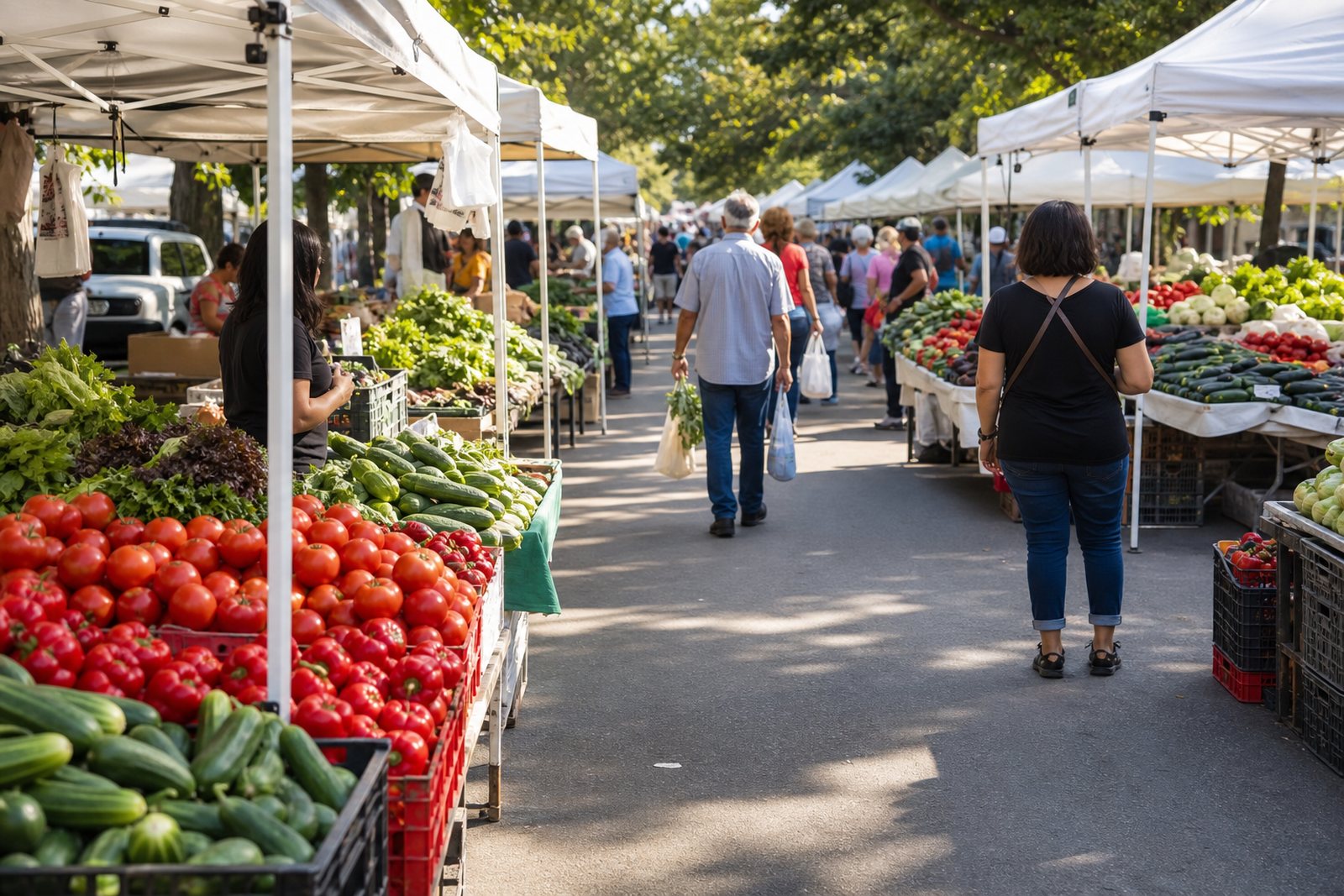
Busy outdoor farmers market aisle lined with white canopy tents and crates of colorful produce lit by morning sunlight
A Saturday market in full swing. StallDeck is the part nobody sees.
  • Assigned
  • Open
  • Season hold

What is on the board

Six parts, built from the way markets actually work

Not a general purpose booking tool with a produce photo on the home page. Every screen here uses market words: stalls, holds, day rates, category caps, certificates, no shows.

A stall map with real footprints

Draw your site to scale, number stalls the way vendors already say them out loud, and record width, power, shade and water on each one. A ten foot baker never lands in an eight foot spot again.

Applications with the paperwork attached

Vendors apply once, upload the certificate of insurance, cottage food license, scale certification or nursery permit, and the board watches every expiration date. You get a flag two weeks out instead of a phone call from the health inspector.

Season invoices and a day rate ledger

Bill season vendors on your own schedule, charge day rates or a percentage of reported sales, and record cash, card and check against the right stall. Every dollar taken at the gate lands in the same ledger as the invoices you sent in March.

Check in and the no show log

Walk the aisle with a phone and tap each vendor in as the truck parks. Empty stalls are recorded automatically, so the third missed Saturday in a row is a fact on a record and not an argument in the parking lot.

The public list shoppers actually read

One click publishes this week's lineup to a page you can hand to your web person, embed on the association site or print as the gate sign. Cancel a vendor on Thursday and every one of those copies changes with it.

Category caps and product mix

Set a ceiling on how many honey, soap or salsa vendors your market carries, and the board refuses to overload a category while you are assigning. The mix report tells your board why the produce ratio held at 58 percent all season.

What managers report after one season

Numbers from markets between 12 and 140 stalls

These come from 96 markets that ran a full season on the board in 2025 and shared their before and after figures with us.

26 min

To build a Saturday map

Season holds land first, standby vendors sort by application date, and the map refuses conflicts as you drag. Managers who used to spend a Thursday evening on the layout now do it over coffee.

94%

Of fees paid before market day

Season invoices go out on a schedule and day vendors get a payment link with their assignment. Chasing shrinks to the handful of cash vendors who prefer to hand it over at the gate.

$4,180

Recovered per season

The average across our 96 market sample, from stalls that were used but never billed, no show fees that were never applied and season vendors who quietly dropped weeks. The ledger catches all three.

11 hrs

Back in the month

Publishing once instead of four times, closing the day at the market instead of at home, and pulling the board report in a minute. That is most of a market day returned to you.

From the aisle

Managers who stopped rebuilding the map every week

We run 74 stalls and a line of day vendors every June. The map used to live on a whiteboard in the office and I photographed it with my phone before I drove home. Now I assign on Wednesday night, every vendor gets their stall number by text, and we have not put two trucks in one spot since April.

Marisol Reyes Market Manager, Cedar Falls Growers Market
Cedar Falls, Iowa

I coordinate four markets across three counties for a board that wants numbers every quarter. Fee totals, weekly attendance and the produce to prepared food ratio used to cost me two weeks in January. I pulled the whole packet for last season in about nine minutes and spent the rest of the day on vendor recruiting.

Dale Whitcomb Executive Director, Piedmont Market Association
Greensboro, North Carolina

What my vendors noticed first was the public page. It updates itself the moment I close the week, so shoppers stopped calling the office to ask whether the mushroom grower is coming. The no show fee finally holds up too, because the record is sitting right there with the date on it.

Anh Tran Market Coordinator, Riverbend Saturday Market
Bend, Oregon
318 US farmers markets running the board
9,760 Stalls assigned across a typical weekend
$1.9M In stall fees recorded last season

Plans priced like a market budget

Pick the plan that matches how many markets you run

Vendor accounts, the public listing page and the season reports are in every plan. You pay for the number of markets and stalls on the board, not per person on your team.

Single Market

One market day, one location. The plan most Saturday markets start on.

$39 per month

  • One market location, up to 60 stalls
  • Stall map with widths, power and shade tags
  • Vendor applications and document expiration alerts
  • Day rate and season fee ledger
  • Public vendor list page and printable gate sign
  • Email support, answered inside one business day
Request a walkthrough

Association

County and regional associations running a portfolio of markets under one roster.

$189 per month

  • Unlimited markets and stalls across the association
  • Everything in Market Season
  • One shared vendor roster across every market you run
  • Per market manager roles and permissions
  • Consolidated fee reporting for the board and funders
  • Data import from your current spreadsheets and forms
  • A named contact and a scheduled quarterly review
Request a quote

Every plan is billed monthly in US dollars, with no setup fee and no annual contract. You can cancel at any time from the account screen and your board keeps working until the end of the month you paid for. Seasonal markets often pause between November and March, and a paused month is not billed.

Questions managers ask on the first call

Straight answers before you book anything

Market Bell

The magazine we keep for market managers

Market Bell is the notebook we fill in between markets: the permit deadlines, the fee arithmetic and the load-in habits collected from managers who let us stand in the tent with them. Three of the newest pieces are below, and all nine are open to read.

practical guide

How to Build a Farmers Market Stall Map Before Load-In

A stall map is a safety document, a fairness policy and a load-in schedule at once. Here is how to measure your site, place the fire lanes and seat vendors before the first truck arrives.

Market Bell

comparison

Flat Fees vs Percent of Sales vs Season Dues for Markets

Flat fees are simple to collect and blind to a rained out morning. Percent of sales follows the day but asks vendors to report honestly. Here is what each model costs your office to run, and who it favors.

Market Bell

regulation and compliance

How to Accept SNAP, WIC and Senior FMNP at Your Market

Federal benefit programs run on paperwork that starts long before market day. Here is who holds the authorization, what equipment you need, which items qualify at the stall and what records FNS expects.

Market Bell

Read all nine articles in Market Bell

Written on site rather than from a press release, and every piece carries the day it was published and the day it was last checked.

Book a walkthrough

Send us your site plan and we will show you your own market on the board.

Thirty minutes, screen shared, with your stall numbers and your vendor names in it. No slides about the future of local food, just your Saturday laid out the way it will actually look.

  • We reply inside one business day, and never on a Saturday morning when you are at market.
  • Your vendor roster stays yours. We use it for the walkthrough and delete our copy after.
  • Ask us anything about migrating from spreadsheets, paper applications or a shared drive.

One reply from a person who has stood at a market gate at 6 a.m., usually the same day. If a form is not your thing, write to jimenezjulien42@gmail.com and tell us how many stalls you run.