Where cash still wins, and where it is thinning
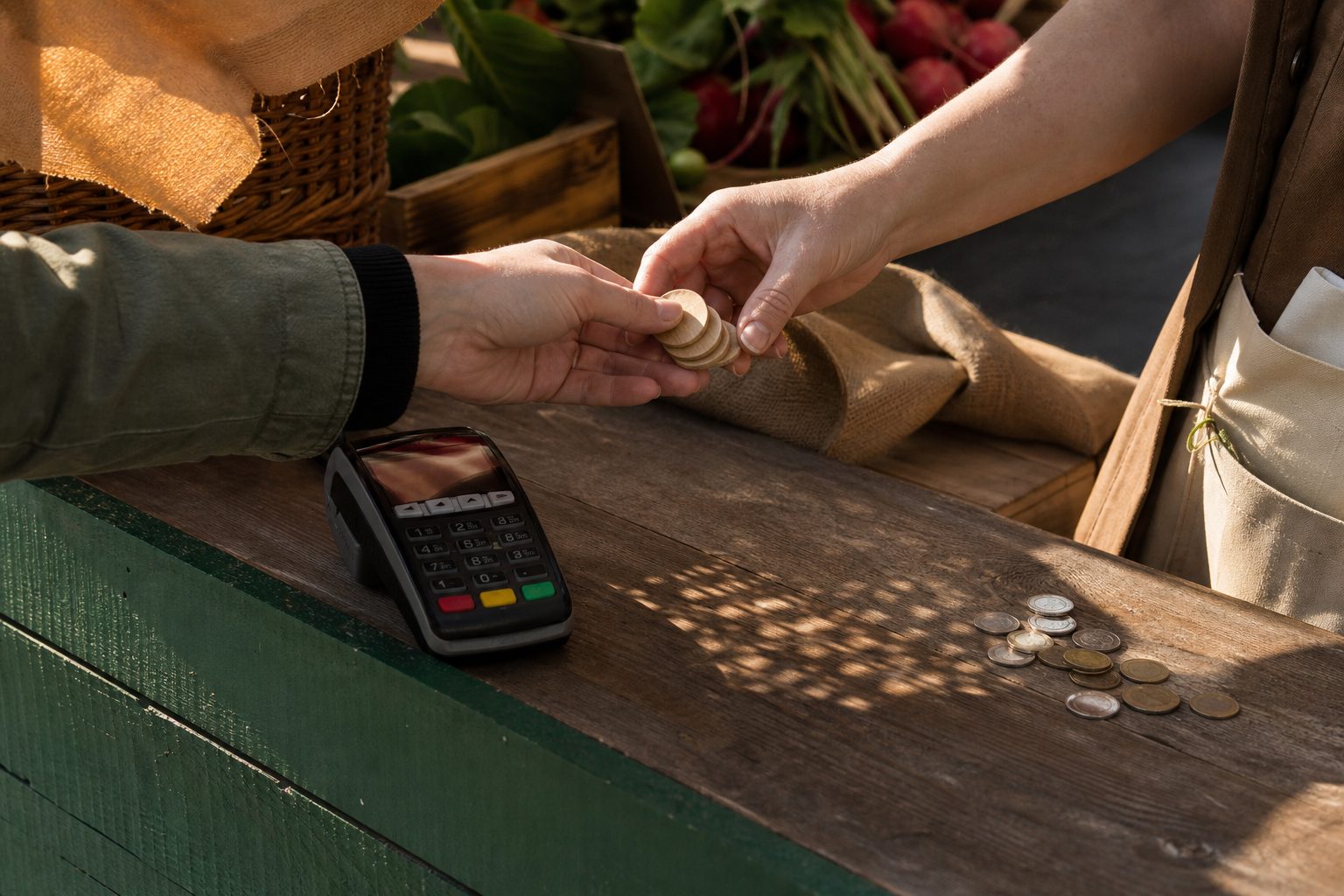
Cash used to be the default at farmers markets. For much of the last century, shoppers arrived with bills and change. Farmers and artisans kept heavy aprons or lockboxes under the table. Cash still has its place, especially at markets without steady internet or among older shoppers who are used to paying in person.
Some small markets in rural areas report that cash remains the most common payment. Vendors prefer it because there are no processing fees and no waiting for deposits. For customers, cash can be more tangible, helping them stick to a budget. There is also a segment of the market that distrusts cards or digital payment and prefers the privacy of cash.
However, cash is losing ground. In urban and suburban markets, more shoppers expect to pay with a card or a phone. Many younger customers do not carry cash at all. Some vendors notice a sharp drop in cash sales once a card terminal is visible at neighboring stalls. Even at markets that still use tokens, the actual bills circulating from customer to vendor get lighter every season.
Keep reading: How to Build a Farmers Market Stall Map Before Load-In
Wooden tokens and paper scrip: the true reconciliation cost
Wooden tokens and paper scrip were designed as a bridge between cash, cards, and the specific needs of nutrition programs. Markets issue them at a central booth in exchange for EBT, credit, or debit transactions. Shoppers spend them like cash with any vendor, and vendors redeem them for payment after the market.
The biggest headache is reconciliation. At the end of each market day, managers collect tokens and scrip from every stall. They sort, count, sum totals per vendor, and check against booth records. If paper scrip or tokens walk away in a pocket, the market absorbs the loss. Sorting by color or denomination takes time, and mistakes happen when stalls return mixed bags or faded paper.
Weekly reconciliation does not end at counting. Managers must then track funds in their ledgers and issue checks or electronic payments, sometimes days after the sale. Staff hours add up. Some markets use volunteers, but many rely on paid coordinators to handle the paperwork. In the busiest part of the season, a market can spend several hours a week just on token accounting.
There is also the cost of lost or damaged tokens. Vendors occasionally drop tokens, and paper scrip is prone to getting wet or torn. Reordering custom tokens takes time and carries an upfront cost. While these costs may seem small, they quietly eat into the budget over the course of a year.
Card at the stall versus card at the market booth
Card Readers with Each Vendor
Many vendors now use their own card readers, often linked to a smartphone or tablet. This setup gives each stall the ability to accept cards directly, which appeals to shoppers who expect a fast checkout. Some vendors report an immediate uptick in sales after adding card acceptance.
But not every vendor is comfortable with the technology. Newer farmers, smaller value-added producers, and those with less tech experience may hesitate. There is also the question of cost: each vendor must buy or rent a reader and manage their own merchant account. In markets with many part-time or seasonal vendors, this can be a barrier.
Centralized Card Processing at the Market Booth
Centralized processing remains common, especially where markets issue tokens or scrip for nutrition incentives. Shoppers swipe their card at a single location, receive tokens, then spend those tokens at any stall. This system reduces the technology burden on vendors and ensures all stalls can serve SNAP and incentive shoppers without extra equipment.
However, centralization can create a bottleneck. On a busy Saturday, lines can form at the market booth. Shoppers may balk at the extra step. Some leave without buying if the process takes too long. For managers, the central booth adds another layer of staffing and recordkeeping.
Hybrid Approaches Emerging
Some markets allow vendors to take cards for their own goods, while the market booth handles nutrition program transactions. This reduces pressure on the booth and lets vendors who want to invest in their own readers do so. It also means managers must track more payment streams and ensure vendors follow market-wide policies for card acceptance, returns, and fees.
Keep reading: Flat Fees vs Percent of Sales vs Season Dues for Markets
App based tokens and the offline connectivity problem
Mobile apps promise to replace wooden tokens and paper scrip. In theory, an app can issue digital tokens, track balances, and let vendors redeem at the push of a button. Customers get a QR code or barcode, vendors scan and confirm the payment, and the market's books update in real time.
In practice, the biggest hurdle is connectivity. Many market locations lack reliable cellular or Wi-Fi service. Parking lots, rural fairgrounds, and even city parks can have dead zones. If the app cannot reach the server at the moment of sale, transactions stall. Vendors may need to fall back to paper or cash, and records may become inconsistent.
Offline functionality is a partial fix. Some apps store transactions locally and sync when a connection returns. This helps, but raises its own risks: if a device fails before syncing, or if the database gets corrupted, data can be lost. Markets must train vendors to check that their devices are up to date and troubleshoot common glitches. Not every vendor is willing to manage this added layer of technology during a busy market day.
Another issue is device access. Not all vendors own a smartphone or tablet, and some prefer not to use a personal device for market business. Markets considering a shift to app-based systems may need to supply devices or provide shared ones at the booth. This adds to setup, maintenance, and replacement costs.
How nutrition incentive programs push markets toward digital
Nutrition incentive programs such as SNAP, WIC, Senior FMNP, and Double Up Food Bucks are a growing share of market sales. These programs rely on accurate tracking, strict eligibility checks, and timely reporting to funders. Paper scrip and tokens were designed to enforce compliance, but digital tools are becoming more attractive as programs grow more complex.
Digital systems can restrict incentives to eligible foods or vendors, reducing the risk of misuse. Balance updates are instant, and managers can spot irregularities sooner. This is especially important as more markets partner with hospitals, nonprofits, or state agencies that require detailed reports. Paper systems often lead to errors or missing records, especially over a full season.
Some incentive programs now encourage or even require digital tracking. They may offer grants for equipment or training, but the shift still takes time and planning. Markets that run several programs side by side face a complex balancing act: digital systems can simplify this, but only if all vendors and staff are comfortable with the tools. Otherwise, managers may find themselves running parallel systems, doubling the work rather than saving it.
See how StallDeck handles this for farmers markets
What processing fees do to a small vendor's margin
Processing fees are a steady concern for vendors at every scale. When a customer pays with a credit or debit card, the vendor or the market pays a percentage of each transaction plus a flat fee. For small dollar sales, the kind common at farmers markets, these fees can take a noticeable bite out of profits.
If a vendor sells a $5 basket of berries and pays a 2.7 percent fee plus a 10 cent flat fee per transaction, that is 24 cents gone before accounting for costs of seed, labor, and transport. For markets using centralized token systems funded by card or EBT, fees often come out of the market's budget or are deducted from vendor payouts. Over a season, these small fees add up.
Some markets respond by setting minimum card purchase amounts, or by adding a fee for card transactions. This can discourage small purchases and may clash with the inclusive spirit of a market. Other vendors absorb the cost as a cost of doing business. The math varies by region and by the mix of produce, crafts, and prepared foods.
For nutrition programs, most markets are not allowed to pass fees to the shopper, and incentives must be delivered at full face value. This means the market or vendor eats the fee. As more transactions move to cards or digital tokens, these costs grow. Markets must watch their budgets closely, especially if grant funding is uncertain from year to year.
Questions to answer before you retire your token system
- How will every vendor accept payment? Not all vendors have the same comfort with technology. Some may need help setting up card readers or apps, while others rely on cash or scrip.
- Will your market lose shoppers who depend on SNAP, WIC, or other incentives? A digital-only system may leave out customers without smartphones or reliable internet access. Make sure your solution matches your community's needs.
- Can your market location support reliable connectivity? Test your signal in different parts of your site. Dead zones can derail a digital rollout.
- Do you have the staff or volunteer bandwidth to train and support vendors? Switching to cards or apps requires training, troubleshooting, and ongoing support. Plan for the learning curve and expect some resistance.
- How much will processing fees or new equipment cut into margins? Do the math for your most common transaction sizes. Consider grants or fundraising to offset costs if needed.
- Are your reporting requirements getting stricter? Digital systems can ease compliance for incentive programs, but require consistent use and accurate setup. Make sure you can deliver what your funders and partners expect.
- What will you do if technology fails on market day? Always have a fallback plan, whether it's a stack of paper scrip, a cash box, or a manual ledger for the day.
For markets considering the next step, a system that handles vendor stall assignments, collects fees, tracks attendance, and manages both cash and digital payments can help ensure smooth operations and accurate records as payment habits continue to evolve.